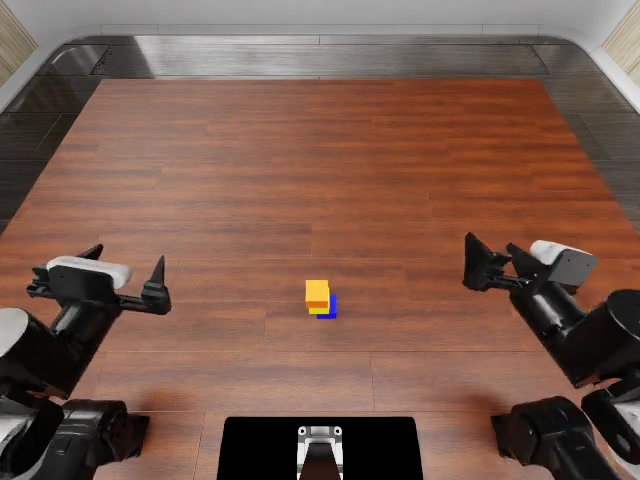
After seeing so many GPT-6 Astra robot demos on X, we had to try it on RoboDojo — a benchmark that is much less forgiving than a one-off demo.
We ran 20 RoboDojo tasks, three seeds each. Astra got three camera views, the task instruction and the robot’s current state. It decided where to move each arm, how to orient the wrist and when to open or close the gripper; the usual robot stack handled the low-level motion.
GPT-6 Astra · xhigh · 20 tasks × 3 seeds · successes and failures both included.
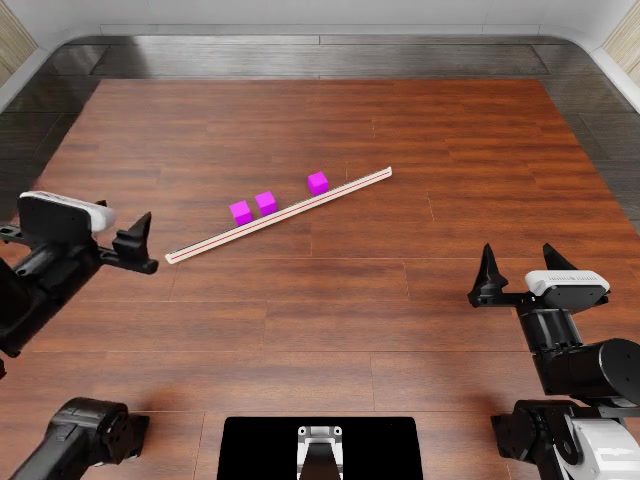
ALIGN BLOCKS WITH A RULER · 3/3THREE SEEDS
The first plan was to lift the ruler. The successful plan was simpler: push it and use the straight edge. All three seeds passed.
11/60full successes
18.3%success rate in this pilot
24.42mean RoboDojo score / 100
318model decision chunks
This was a small pilot: 20 selected tasks, one public layout per seed, and a shared adaptive conversation across runs. Removing the button-counting task, which had prior development, changes the result to 8/57 (14.0%). It is not an official RoboDojo submission.
想知道它是怎么控制机器人的吗?
GPT-6 Astra 是怎么 把“看见”变成动作的?
我们把这次测试留下的代码、相机画面和 action 记录串了起来,从一次真实抓取开始,看模型每一步拿到什么信息、怎么估 3D waypoint,以及一条高层命令最后怎样变成机械臂动作。
Astra makes a decision every chunk; ordinary robotics software handles the motion in between.
At each decision point, Astra gets three RGB camera views, the task instruction and the robot’s current state. It chooses which arm to use, where the end effector should go, how the wrist should be oriented, how far to close the gripper and how long that move should last.
A small controller turns those choices into smooth trajectories. CuRobo and the robot interface handle inverse kinematics and execution. When the chunk finishes, Astra sees the scene again and decides whether to continue, correct the move or try something else.
Head + wrist RGB, instruction, joint states, grippers and end-effector poses.
02
Pick the next move
Which arm, where to move, wrist orientation, gripper setting, duration, and a short note about why.
03
Expand the motion
move, grip, hold or home; interpolation and inverse kinematics fill in the motion between decisions.
04
Look again
The next image decides whether the plan continues, gets corrected, or is abandoned.
What went into the model
Astra received camera images, robot state and public static camera/robot calibration. It did not receive simulator object positions, depth, segmentation, reward state, reference actions or expert trajectories. We inspected the bridge code; the full interactive session did not undergo an independent information-isolation audit. The button-counting task also had prior development and is reported separately.
ONE RUN / ALIGN BLOCKS
The first idea failed. The second one worked.
Astra first tried to lift the ruler. The next camera view showed it was still flat on the table, so the plan changed: close the gripper, push the ruler from behind, and use its straight edge to line up the blocks.
After checking the result, the arms moved back toward their starting posture. All three seeds passed the RoboDojo evaluator.
Notice the failed liftThe next RGB view makes it obvious that the ruler never left the table.
Try a different contactThe seed-0 recovery chunk expands a few move / grip / hold commands into 84 submitted vectors.
Check the resultThe following chunk returns toward the starting joint state. RoboDojo score: 100/100.
How a pixel becomes a robot target
Public camera calibration turns a chosen image point into a ray. The controller intersects that ray with an estimated contact-height plane, then chooses an end-effector orientation and gripper state. The height comes from the visual estimate; the simulator does not hand over object depth.
Choose a task and a seed to see the RoboDojo score and the decision notes saved for that run. The full 180-video archive stays out of GitHub so this page remains quick to load.
Full success Partial score Zero score
Task
Seed 0
Seed 1
Seed 2
No tasks match these filters.
What you can inspect
Each run keeps its RoboDojo score, short decision notes, primitive counts and submitted action counts. The full RGB/action archive stays in the local research workspace to keep this public page lightweight.
These are the short notes saved with each action command, not internal chain-of-thought traces.
There are only four tasks in each capability category, so these cards are best read as clues about failure patterns rather than category-wide estimates.
03 / WHAT STOOD OUT
Some plans worked. Some failed at contact.
Three runs show where the system succeeded, where it recovered, and where a sensible plan still fell apart in the physics.
ALIGNMENT · 3/3
The ruler became a tool
The first lifting attempt did not work. Astra switched to pushing the ruler with a closed gripper and used its straight edge to line up the blocks. All three seeds passed.
LANGUAGE STACKING · 2/3
The plan survived; the grasp did not
Two seeds recovered from placement errors and completed the requested stack. In the third, the requested order was tracked but the farther orange block was never acquired reliably.
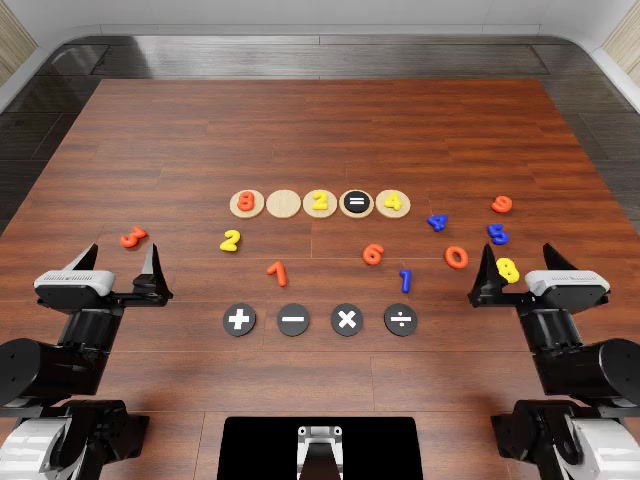
EQUATION · 0/3
Knowing the answer was not enough
The recorded rationales identified plausible missing symbols. Grasping and placement still failed, so all three scores stayed at zero.
04 / HOW 18.3% COMPARES
RoboDojo is hard. Here is the scale.
Published task-level means over the same 20 task names give 18.3% a useful scale. The rollout protocol is different, so this comparison is context rather than a leaderboard rank.
System
Success rate
Mean score / 100
Source: RoboDojo public leaderboard, snapshot dated September 5, 2026 and downloaded September 8. Baseline policies were not rerun, and their rollout conditions differ from this pilot. Use the table as context, not as an official ranking.
05 / FOUR RUNS TO WATCH
Four clips tell the story faster.
Each clip puts all three seeds side by side: two tasks with successful runs, one symbolic failure, and one precision task that made partial progress.
SEED 0SEED 1SEED 2
Agent waiting time is omitted; shorter runs hold their final frame. Native evaluator outcomes determine success.
06 / DATA & NOTES
Data, protocol, and the source.
The repository keeps the results, decision notes, protocol and four representative clips. The 600+ MB raw archive stays in the research workspace.
Model setting. All 60 runs used GPT-6 Astra in xhigh mode, as confirmed by the experiment operator. The model setting itself was not serialized into every trial artifact, and the complete prompt/token ledger was not archived.
The button task had prior development. It had earlier source inspection and calibration. Removing those three runs changes the result from 11/60 to 8/57. The other runs also shared one adaptive conversation, so experience could carry across tasks.
This is a pilot, not a leaderboard submission. We used 20 selected tasks, three seeds per task and one public layout per seed. All runs are simulated; this experiment does not establish real-robot transfer.
About this project. The site comes from the completed codex-pilot20-v1 experiment record. Historical filenames still use Codex for the controller/bridge; the model making the decisions in this campaign was GPT-6 Astra in xhigh mode.
We used RoboDojo and its public implementation. This is an independent experiment and is not affiliated with the benchmark organizers.